A Step-By-Step Guide to Hardware Security
Trezor.io/Start offers a carefully structured guide for initializing your Trezor device. Unlike software wallets, hardware wallets keep your private keys offline, ensuring your cryptocurrency remains safe from hacks and online threats.
The first step is to verify your device. Trezor ensures every unit is authentic by guiding users through packaging inspection, firmware checks, and safety confirmations. This prevents tampering and guarantees the integrity of your wallet before storing any funds.
After verification, the platform guides you in generating a recovery seed—a sequence of words that acts as a master key for restoring your wallet if the device is lost or damaged. Trezor.io/Start emphasizes keeping the seed offline, avoiding screenshots, digital copies, or storing it on cloud services. Proper seed management is the cornerstone of secure crypto custody.
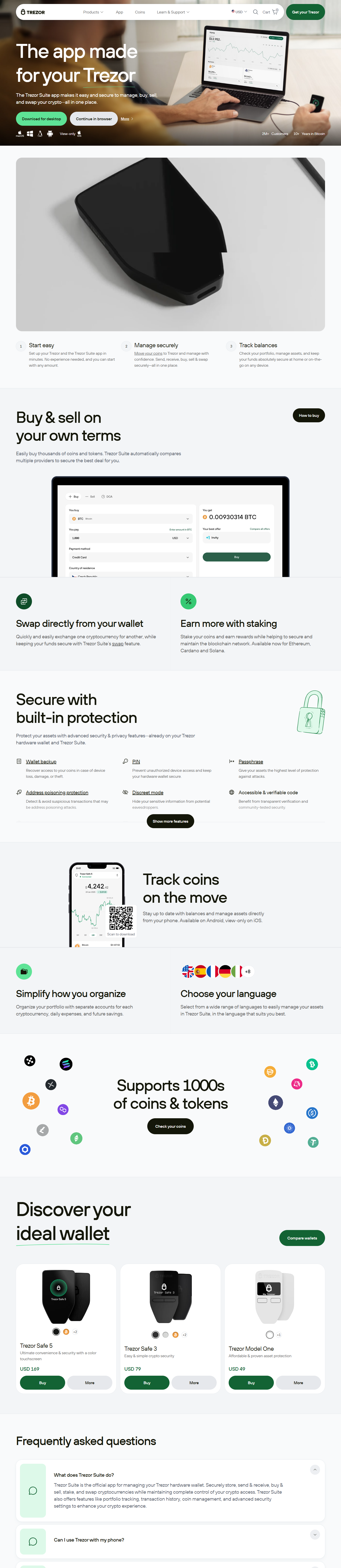
Once your device is set up, Trezor Suite is introduced as the main interface for managing your portfolio. The software provides an intuitive dashboard for sending and receiving coins, monitoring balances, and reviewing transactions. By confirming each transaction on your device, Trezor Suite prevents malware or phishing attacks from altering amounts or addresses.
Trezor.io/Start also focuses on educating users about threats like phishing websites, fraudulent applications, and malicious extensions. By learning to identify these dangers, users reduce the risk of human error and ensure their funds remain protected.
For users seeking advanced security, Trezor supports features like passphrase-protected wallets, hidden accounts, and Shamir backup. These functions add layers of protection, allowing users to customize security according to portfolio size and personal privacy requirements.